If Your Employees Are Afraid of You, You're Probably Not Hearing the Truth
“Your biggest thief of all business today is fear.”
- Jack Welsh, former CEO General Electric
Mark Cuban recently reflected on an uncomfortable lesson from his own leadership journey: there was a time when his employees were afraid of him.
He was intense. Demanding. Impatient. And like many successful leaders, he eventually discovered that being the person everyone was afraid of came with a price. Not just a cultural price. An operational price.
But the lesson isn't really about Mark Cuban. It's about what happens to every organization when employees become afraid to tell the leader the truth.

Mark Cuban has reflected on how his leadership style once created fear among his employees, and what he learned from changing it.
When people are afraid of their leader, they don't necessarily stop working. They stop telling the truth. And that can be far more dangerous.
Fear Can Make a Leader Feel More in Control
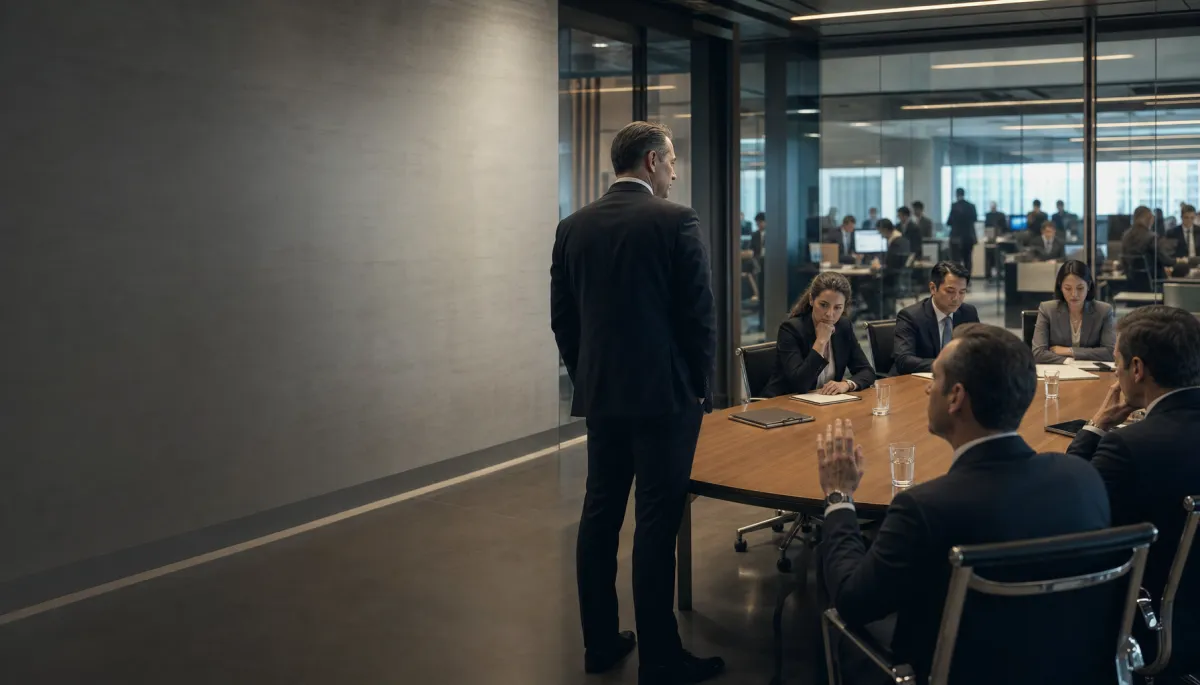
Think about what happens when employees are afraid of the boss. Meetings become quiet. People agree quickly. Problems seem to get resolved. Deadlines are met.
Nobody wants to be the person who says, "We have a problem."
From the outside, it can look like strong leadership. But silence isn't alignment. Compliance isn't commitment. And the absence of bad news doesn't mean there isn't any.
Sometimes it simply means nobody wants to be the one who delivers it.
This is where fear becomes an operational problem. Your employees are closest to the work. They see the supplier that keeps missing requirements. They know the process that doesn't actually work the way the procedure says it does. They know which customer is about to leave. They know which employee is struggling. They know which project is six weeks behind schedule even though the dashboard says "green."
They know.
The question is: Do they feel safe enough to tell you?
The Information You Don't Receive Is Often the Most Expensive
Leaders spend enormous amounts of time trying to improve communication.
More meetings. More dashboards. More reporting. More KPIs. More status updates.
But none of those systems can compensate for a culture where people are afraid to tell the leader what is really happening.
You can have the best ERP system in the world and still make terrible decisions if the human beings feeding information into the system are filtering reality.
Fear creates an invisible information filter.
The message traveling upward becomes: What happened → what my manager needs to hear → what the executive wants to hear → what we put on the dashboard.
By the time the information reaches the CEO, reality may have been sanitized three or four times. And now the CEO is making decisions based on a version of the business that doesn't actually exist.
That's not a people problem. That's a systems problem.
The Most Dangerous Sentence in Your Company
One of the most dangerous sentences a leader can hear is:
"Everything is fine."
Especially when you know things aren't fine.
A healthy organization doesn't have fewer problems. It surfaces problems earlier. That's a massive distinction.
Problems are inevitable. Late discovery is optional. A supplier will miss a shipment. A customer will complain. A project will slip. A machine will fail. A forecast will be wrong. A new employee will make a mistake.
The operationally excellent organization isn't the one where those things never happen. It's the one where someone feels comfortable saying:
"We have a problem. Here's what happened. Here's what I think we should do."
Early. Before the problem becomes expensive.

The leader thinks the room is quiet because everything is under control. In reality, the room is quiet because people are afraid to speak.
What Great Leaders Actually Create
Great leaders don't create environments where nobody makes mistakes.
They create environments where people surface mistakes quickly.
They don't eliminate disagreement.
They make disagreement productive.
They don't demand that everyone agree with them.
They create enough trust for someone to say:
"I don't think that's going to work."
And here's something every founder and CEO should consider: If nobody ever challenges you, you may have built an exceptional team. Or you may have built a team that has learned not to challenge you.
Those two organizations can look remarkably similar from the corner office. Until something goes wrong.
The Middle Manager Often Pays the Price
There's another layer to this that leaders frequently miss.
When employees are afraid of the CEO, the fear doesn't necessarily stop at the executive level. It gets pushed down the organization. Middle managers become shock absorbers.
They spend their days translating reality upward and translating pressure downward. They protect their teams from the CEO. They protect the CEO from bad news. They quietly fix problems before they become visible. They tell themselves they're helping the organization.
But eventually, something happens. They burn out. They stop escalating issues. They start solving everything themselves.
And suddenly the company has created another dangerous dependency: The leader depends on the middle manager to know what's really happening. And the middle manager depends on a handful of people underneath them.
The farther information has to travel through layers of fear, the more distorted it becomes.
So How Do You Know If This Is Happening?
Don't ask your employees: "Are you afraid of me?"
You're unlikely to get an honest answer.
Instead, look at the behavior.
Ask yourself:
Do people bring me bad news early?
Do employees challenge my ideas in meetings?
Does someone tell me when my decision is creating an unintended problem?
When something goes wrong, do I hear about it immediately or after someone has already tried to fix it?
Do my managers escalate problems, or do they hide them until they have no choice?
When I walk into a meeting, does everyone suddenly become quiet?
Do people tell me what they actually think, or what they think I want to hear?
Those answers will tell you far more about your leadership culture than an employee engagement survey.
You Don't Need to Become Soft
This is where the conversation about leadership often goes wrong. The answer isn't to become passive. It isn't to lower standards. It isn't to stop holding people accountable. And it certainly isn't to become the boss everyone likes.
You can be demanding without being intimidating. You can have high standards without humiliating people. You can challenge poor performance without making people afraid to admit mistakes. You can move quickly without shutting down dissent. You can be decisive while still being approachable.
The goal isn't to remove accountability. The goal is to remove fear from the feedback loop.
Because accountability tells people:
"This matters."
Fear tells them:
"Protect yourself."
Those produce very different behaviors.
Try This With Your Leadership Team
At your next leadership meeting, ask one question:
"What is something happening in this company that you think I don't know about?"
Then stop talking.
Don't defend yourself. Don't explain. Don't immediately solve the problem. Listen.
If the room goes silent, don't assume everything is fine. You may have just discovered the problem. And if someone finally tells you something uncomfortable, don't punish the messenger.
Thank them. Because they just gave you something more valuable than agreement.
They gave you information.
Then ask:
"What made it difficult to bring this to me earlier?"
That second question is where the real learning begins.

The goal isn't to eliminate problems. It's to create an environment where people tell you about them early enough to solve them.
Leadership Is a Feedback System
I've spent much of my career looking at organizations through the lens of systems. And that's how I see this issue.
Leadership isn't just about setting direction. It is about designing the feedback system that tells you whether the organization is actually moving in that direction.
If people are afraid of you, you've introduced noise into that system. Bad news gets delayed. Risks get hidden. Problems get reclassified. Decisions get made too late. And leaders become increasingly disconnected from the operation they're responsible for leading.
The irony is that the more successful you become, the more dangerous this can be. Because the larger your organization becomes, the farther you are from the work.
You can't personally see everything anymore. You have to rely on people to tell you what is happening. Your leadership style determines how much of that truth reaches you.
The Real Question
Mark Cuban's leadership evolution offers an important reminder: sometimes the behaviors that helped you build the business are not the behaviors that will help you lead it at the next level.
Early on, intensity may get results.
As the organization grows, trust becomes a force multiplier. Because eventually, leadership stops being about how much you can personally control.
It becomes about how effectively you can create a system where people can think, speak, decide, and act without waiting for you.
Your Next Move: Action Station
So ask yourself:
If my employees weren't afraid of my reaction, what would they tell me?
And perhaps the more important question:
What would I change if I knew the answer?
Because your employees don't need a leader they are afraid of. They need a leader they can tell the truth to. And the organizations that hear the truth sooner are usually the ones that have the opportunity to act sooner.
Better systems create better businesses.
Sometimes the system that needs fixing isn't the process.
It's the leader..
Until next time, lead with enough courage to hear the truth, enough humility to accept it, and enough wisdom to act on it.